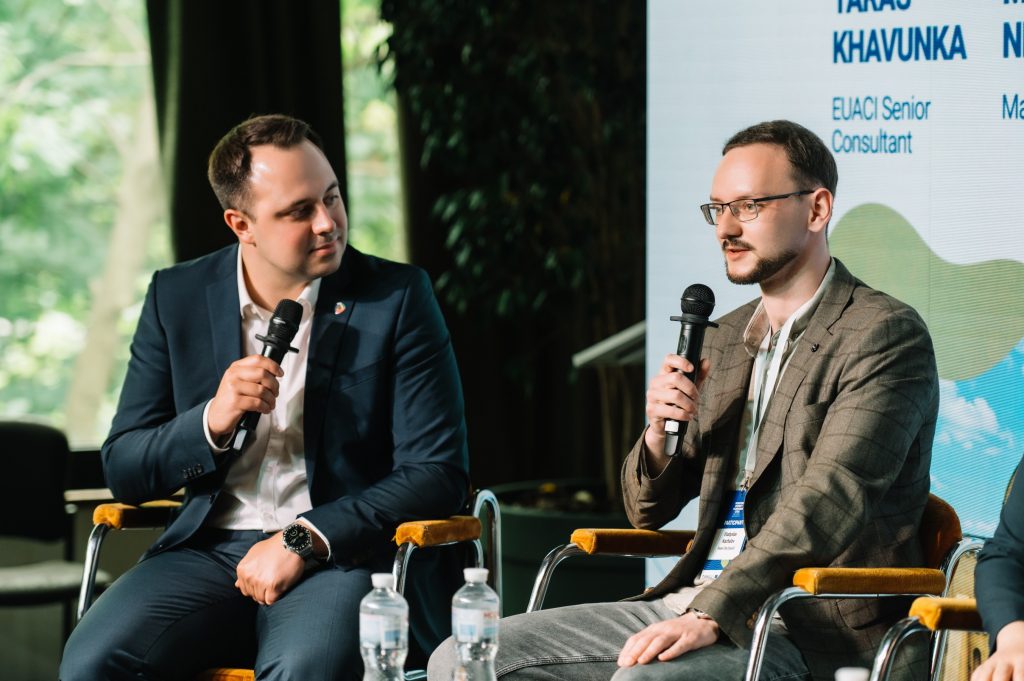
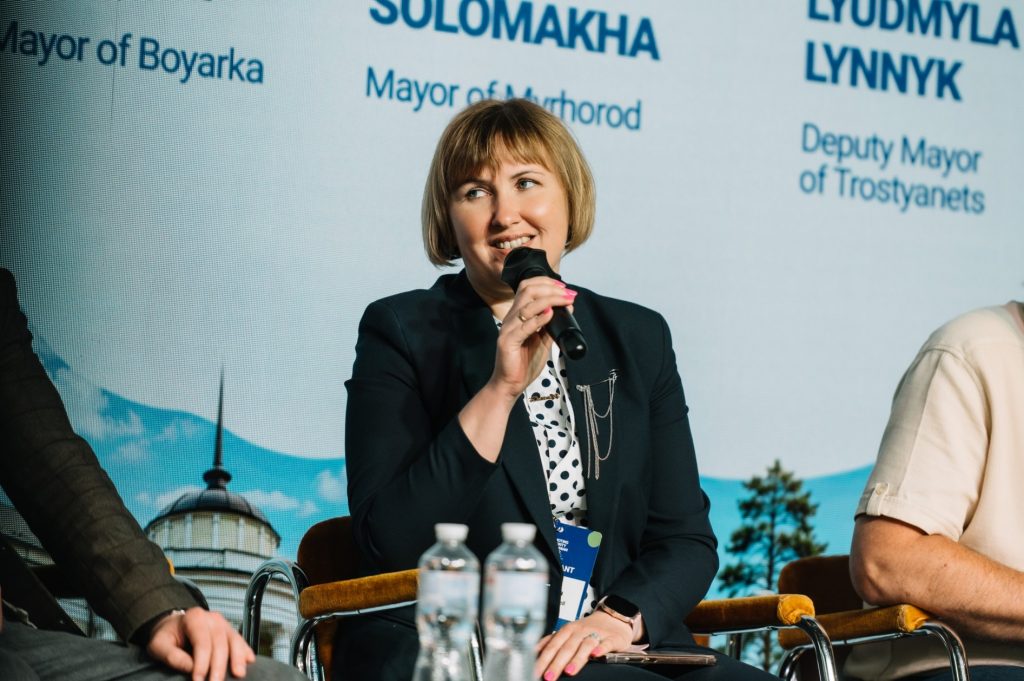
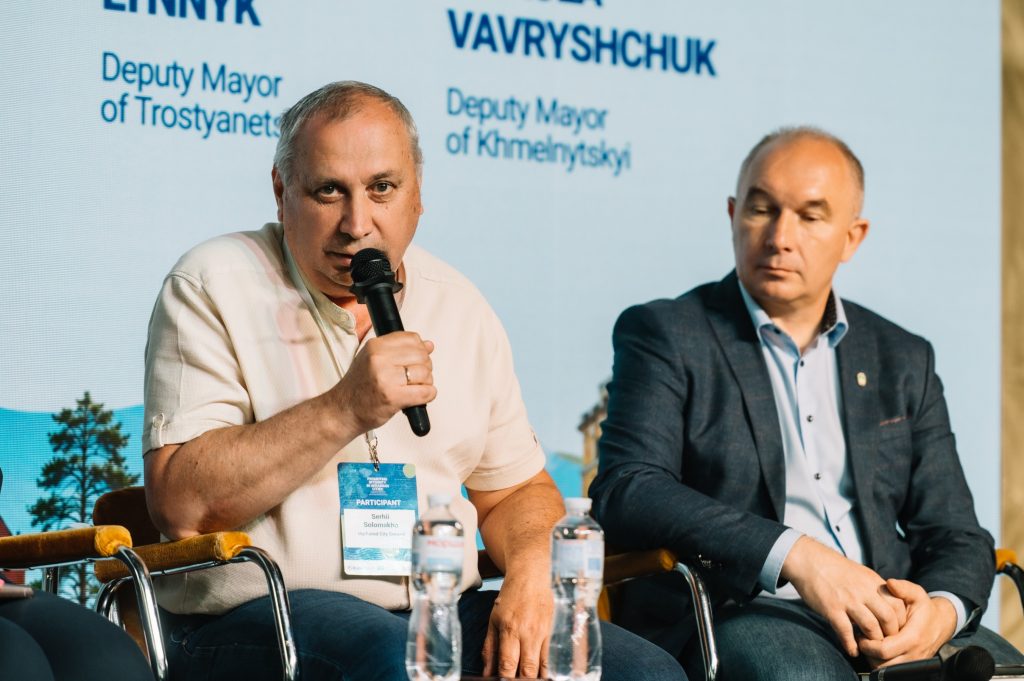
On June 9, at the public discussion “Building Integrity in Ukrainian Cities,” the EUACI launched a peer learning community for cities ready to adopt integrity practices. The first members are Boyarka, Fastiv, Myrhorod, Trostyanets, and Khmelnytskyi.
During the discussion, representatives of the cities spoke about their existing anti-corruption work and the practices from the EUACI’s Integrity Cities they are eager to adopt.
Hanna Salamatina, Head of Administration of the Boyarka City Council, shared that the city has developed an anti-corruption programme and appointed an anti-corruption officer who reviews all draft decisions of the council and executive committee. According to her, with active construction of social infrastructure underway, the partnership with EUACI can help ensure these processes are transparent and understood by the community.
Vladyslav Kachalov, anti-corruption specialist at Fastiv City Council, said the city has developed an anti-corruption programme with a corruption risk register, and anti-corruption officers are in place across its municipal enterprises. Fastiv is also working toward ISO 37001 certification — an international standard for anti-corruption management systems that builds a culture of integrity and transparency. To get there, the city is looking to learn from Integrity Cities’ best practices and get expert guidance on developing the required internal policies.
Serhiy Solomakha, Mayor of Myrhorod, said the city has made progress across several anti-corruption areas. But it was Mykolaiv’s experience — a city that went through this journey with EUACI — that showed him individual initiatives only deliver results when they form a coherent system. His priority of collaboration: transparent procurement and tenders as a tool for saving the city budget.
Yuriy Bova, Mayor of Trostyanets shared an approach to participatory budgeting: the city set up neighbourhood committees where residents decide how to spend funds in their own districts. The model has been running for six years, and its most tangible outcome, according to Bova, is public trust in local government.
Mykola Vavryshchuk, Deputy Mayor of Khmelnytskyi, spoke about the city’s geographic information system, which has been running for eight years and now hosts different open registries — from bike parking to urban planning documentation. Working with EUACI, the city plans to develop independent auditing of processes within the city council and its municipal enterprises.
The Integrity Cities have spent years showing that transparency and accountability are practical tools that change the lives of residents. Through this community, new cities will have the chance to see this from the inside, and make it part of how they govern.