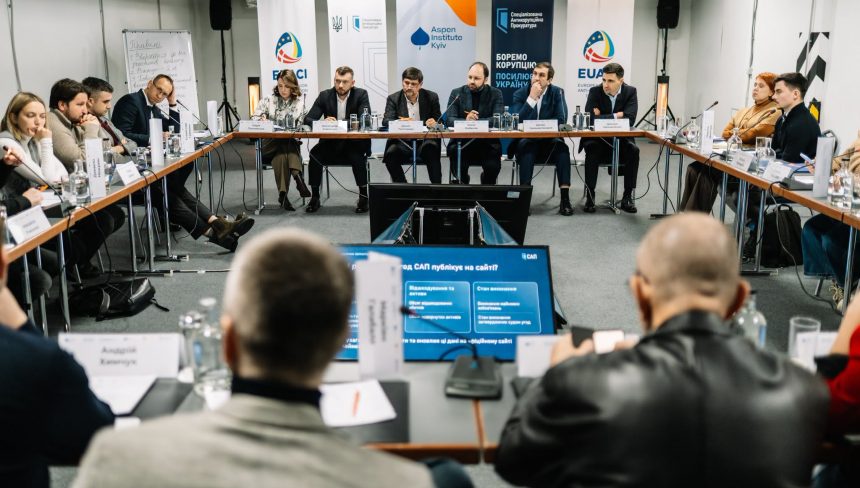
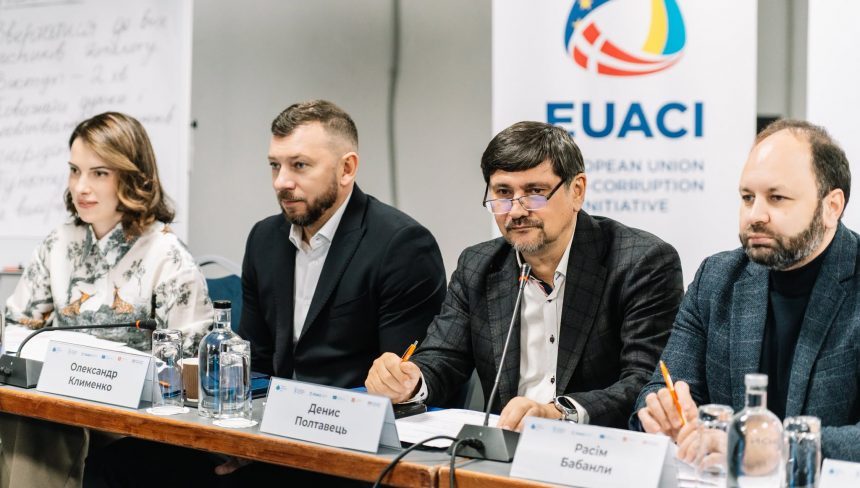
With the support of the EU Anti-Corruption Initiative (EUACI), Aspen Institute Kyiv, in partnership with the Specialized Anti-Corruption Prosecutor’s Office (SAPO), organised two dialogues dedicated to the use of plea agreements in high-level corruption cases.
On 8 September participants discussed Ukraine’s practice of concluding plea agreements, international experience, and public expectations regarding fair punishment.
In particular, they explored under what circumstances a reduced sentence in exchange for cooperation with investigators can be justified, and how to balance the effectiveness of investigations with public expectations of justice.
On 24 November, the second dialogue, “Plea Agreements in High-Level Corruption Cases: Frameworks for Fairness,” took place. During the event, SAPO presented its draft policy on plea agreements.
The document aims to establish clear criteria for prosecutors, ensure consistency in decision-making, and reduce the risk of subjective assessments.
The draft policy is based on seven principles: legality, transparency, universality, individualisation, proportionality, voluntariness, and confidentiality. It further specifies the criteria for assessing the terms of plea agreements, including the severity of the offence, the individual’s role in committing it, their contribution to exposing other crimes, and compensation for damages caused.
The EUACI supports platforms for discussing complex issues in anti-corruption justice, facilitating the exchange of experience, professional dialogue, and the development of more consistent and transparent practices.